This month we are learning about emotions as part of World Emoji Day. Emotions are a certainly a rollercoaster in the first five years of a child’s life, but once children develop emotional regulation skills, this supports their wellbeing for a lifetime.
Young children experience BIG emotions while their brains are developing, and they are not always able to calm themselves to react and behave appropriately. It is very normal to see tantrums in a 2-year-old who has dropped their cupcake on the floor, or a 3-year-old who has had another child take their toy. However, by 4-5 years we expect children to start to internally control their emotions and manage their behaviour rather than always have meltdowns and outbursts.
Emotional self-regulation is a child’s ability to recognise and manage their emotions and behaviour in line with the situation they are in. For example, a child who feels frustrated that they didn’t win a game but shrugs it off and walks away rather than having a tantrum represents a child who has some emotional self-regulation skills in place. Children need to learn these skills to cope with the world and their feelings.
Parents and educators have key roles to play in helping children to recognise their own emotions, and to choose the right behaviour. Rather than thinking of an outburst as bad behaviour, think of it as a skill that you need to help your child to learn. Some ideas for how to do this are:
Describe the emotion they are displaying with an emotion word (e.g. ‘upset’, ‘cross’, ‘excited’, ‘worried’). This lets your child know that you understand how they are feeling and helps to connect them with that feeling, e.g. “I can see you are frustrated”; or “That must have hurt, I can see you’re upset”.
Provide comfort when your child is upset, before trying to teach the right response. Children who are upset are stressed; their brain cannot think rationally during this state. Calming your child’s brain through comfort like a hug, a calm facial expression and voice, or moving to a quiet space allows your child to lower their stress response.
Do not use too many words – when children are stressed and having an outburst, they are not using their ‘thinking brain’, they have reverted to their emotional brain which is not rational. Wait a little while and talk it through when they have calmed down.
Once your child is calm, try to teach better choices and behaviours in response to situations. Paint a picture of the behaviour you want to see, e.g. “when we open the door I need you to hold my hand so you’re safe in the carpark”; “when the song finishes we need you to sit on the rug”; “when your sister takes your toys say ‘don’t do that’ rather than hitting her”. You may need to repeat this training many many times before your child learns the new behaviour!
Set good examples of emotional regulation by managing your own emotions in front of your children. Model coping strategies such as “I’m taking some deep breaths to calm down because that has made me very cross”.
Teach empathy when your child is calm and regulated. If you see another person who is experiencing a big emotion, talk to your child about how that person is feeling and why, e.g. “He is very excited because he hasn’t seen his dad all week”; “She is frustrated because she can’t climb the ladder by herself”; “He is upset because he dropped his ice-cream”.
Allow your child opportunities to practice self-regulation by letting them have experiences that challenge them. Try not to always jump in and solve the problem for them. For example, at the park let your child try to manage when someone else pushes in front him, then teach him the words he could say for next time. If your child is having difficulty sharing a toy, don’t rush out and find/buy another toy for the other child; instead teach her that she can look for a different toy while waiting for her turn.
Meet the author
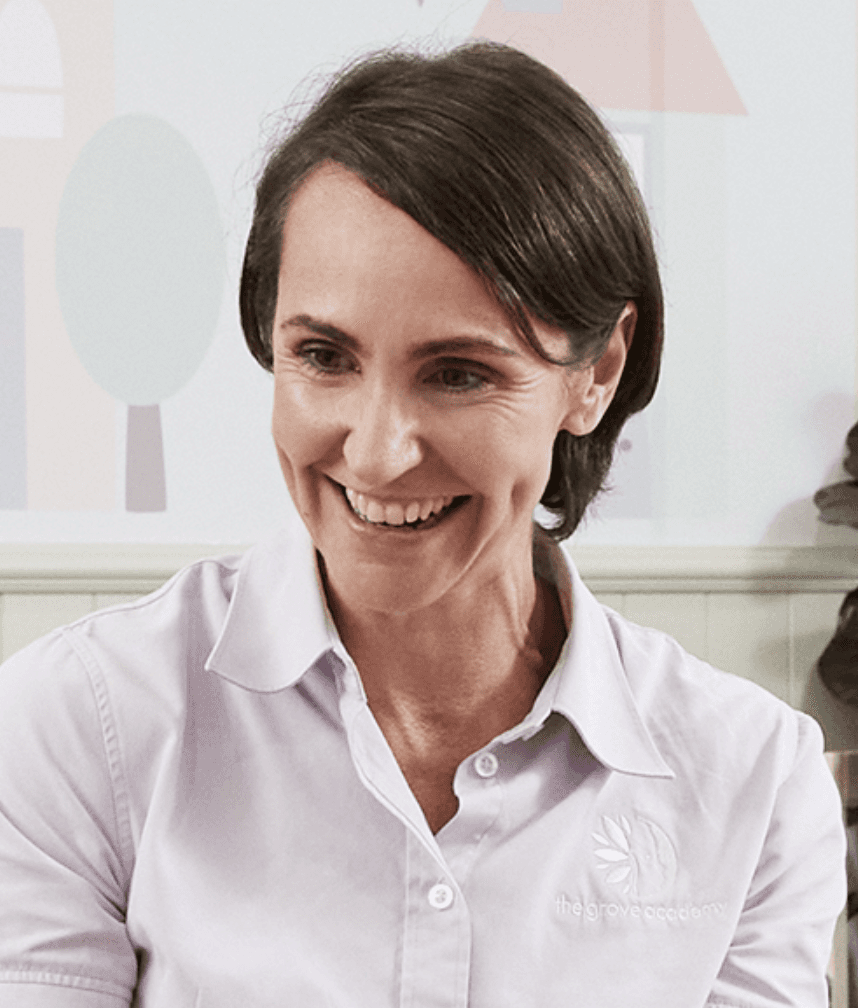
It is exciting for me to share my passion for developing children’s communication with the children, families and staff at the Grove Academy’s services. With over 20 years of experience as a Speech Pathologist working in Australia and the United Kingdom, I bring an innovative approach to supporting children with language and communication needs through early education.





Share:


Other recent posts: